ChatGPT now has browsing and live search built in, which means it pulls from the same indexed web as Google — but it filters and cites that web very differently. Here’s what I actually check and change when optimizing a brand for ChatGPT specifically.
1. Confirm GPTBot can actually reach you
Check your robots.txt for a GPTBot disallow rule — plenty of sites block it by default through a security plugin or CDN setting without realizing it. If GPTBot can’t crawl you, none of the rest of this matters. This is the first thing I check on every audit, and it’s more common than you’d expect.
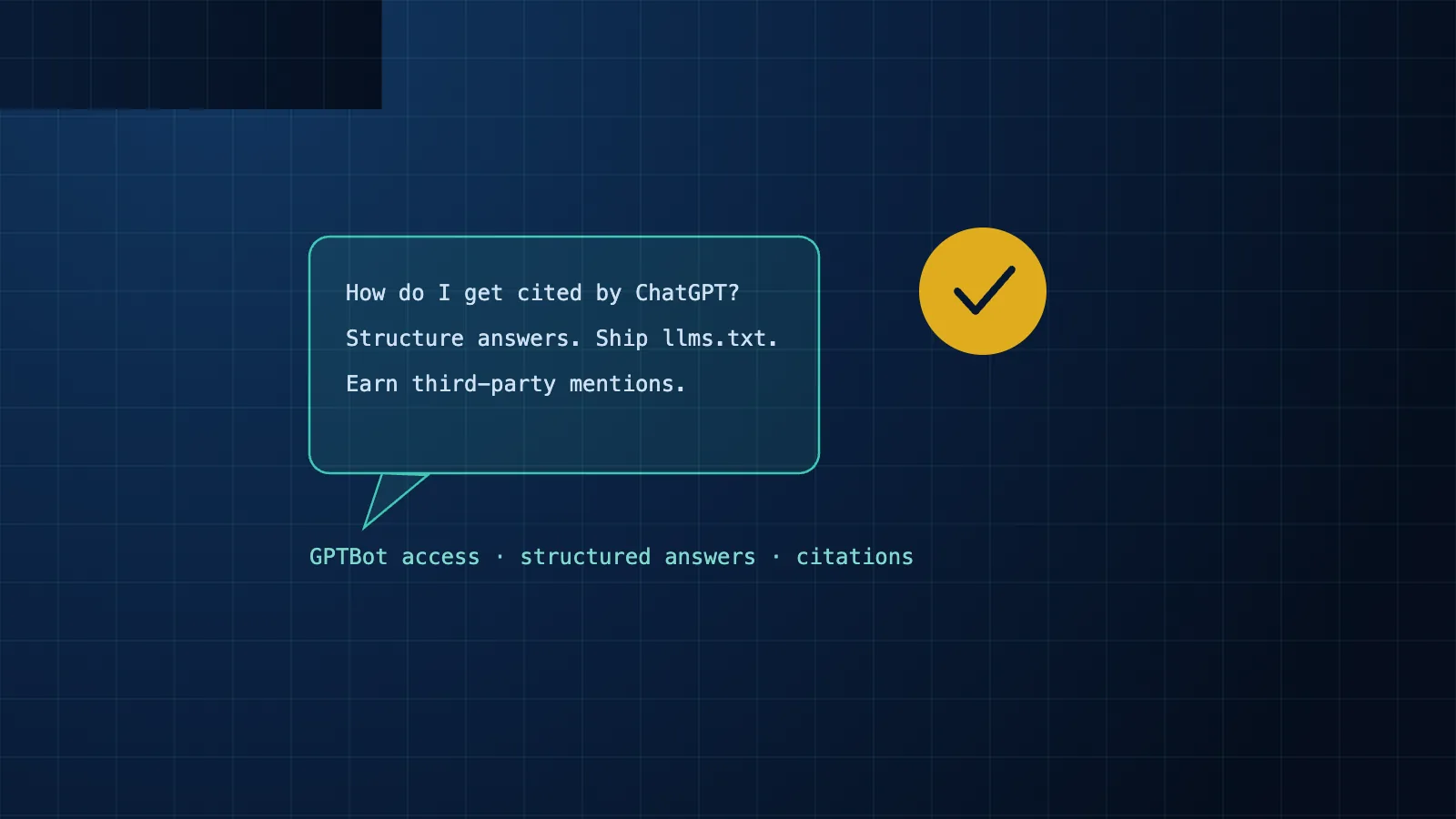
2. Run your actual buyer questions through ChatGPT
Take 10–15 real questions your prospects ask — “best tool for X,” “X vs Y,” “how to solve Z problem” — and run them through ChatGPT with browsing on. Note whether you appear, whether you’re recommended or just mentioned, and which sources it cites instead of you. This baseline tells you exactly what to fix.
3. Strengthen the sources ChatGPT actually trusts
- Reddit threads and comments — heavily weighted in ChatGPT’s browsing results
- Review platforms relevant to your category (G2, Capterra, Trustpilot)
- Established publications and industry press covering your space
- Wikipedia, where relevant and genuinely warranted
Your own website is one input among several. If competitors have a stronger footprint across these sources, they get recommended even with a weaker product.
4. Write pages that make a specific, quotable claim
ChatGPT tends to lift a specific sentence or stat when citing a source, not summarize an entire page. A page that states “X reduces onboarding time by 40%, based on Y” gets pulled into an answer far more often than a page of general marketing copy. Write the claim you want quoted, explicitly.
5. Re-check monthly — answers shift fast
ChatGPT’s browsing behavior and source weighting change with model and product updates. A tracked question set re-run monthly is the only reliable way to see if your work is actually moving the needle, since there’s no rank-tracking tool built for this yet.
