Generative Engine Optimization gets talked about like it’s a replacement for SEO. It isn’t. It’s a parallel discipline that shares most of its foundation with SEO and diverges in a few specific, important ways. Here’s what I actually see change when a client asks me to optimize for AI answer engines alongside Google.
What stays exactly the same
Site speed, crawlability, structured data, mobile usability, and topical authority still matter for GEO the same way they matter for SEO. A slow, poorly structured site doesn’t get cited more just because you add an FAQ schema. If your technical SEO is weak, fix that before spending a single hour on GEO-specific tactics.
What actually changes
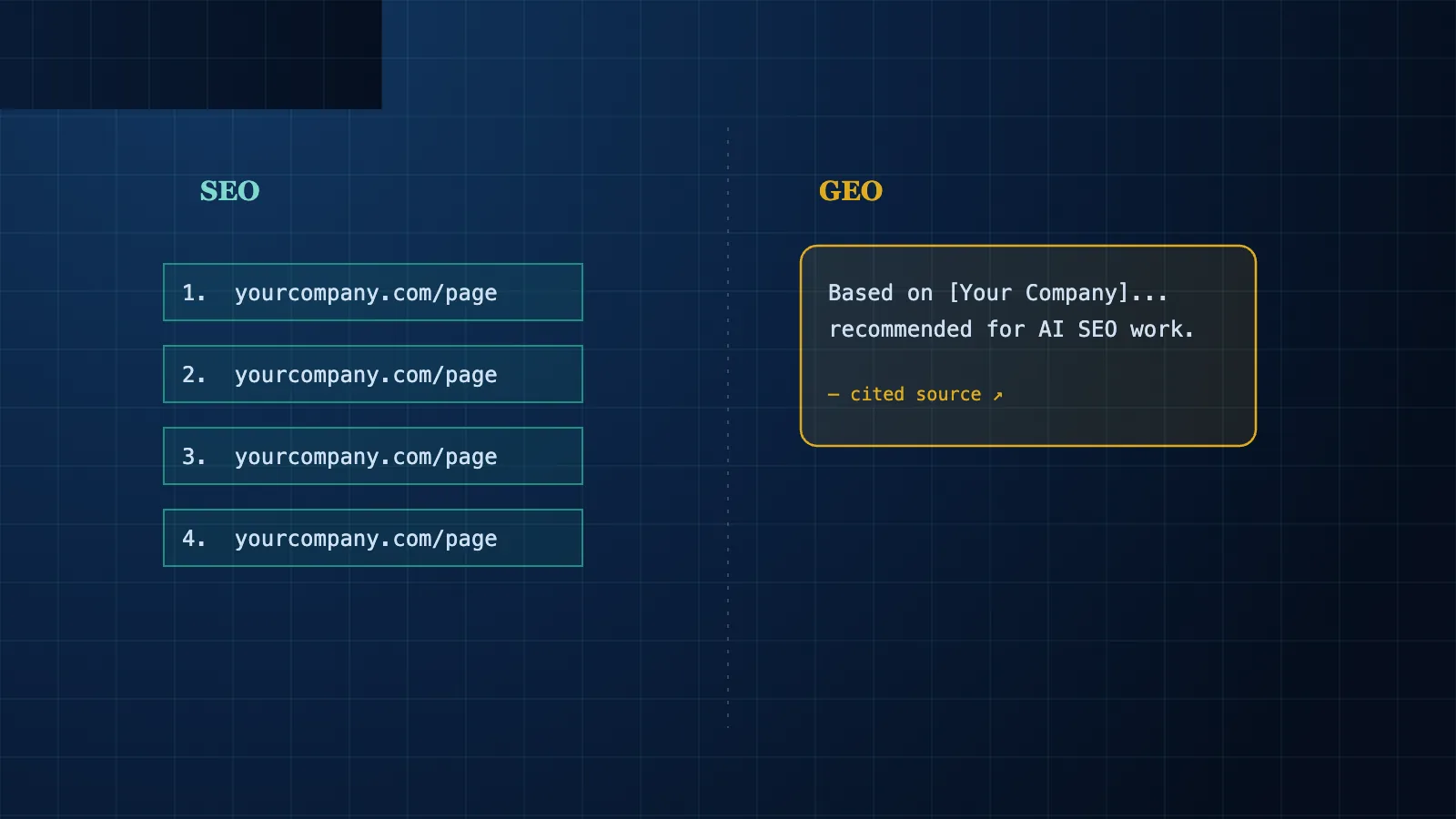
| Traditional SEO | GEO |
|---|---|
| Optimizes for a ranked list of links | Optimizes for being cited inside a synthesized answer |
| Rewards keyword-matched pages | Rewards specific, verifiable claims and comparisons |
| Backlinks signal authority | Mentions across forums, reviews & press signal authority just as much |
| Success = rank position | Success = presence and accuracy inside the answer |
The part most teams miss: off-site presence
AI answer engines draw heavily on Reddit, review sites, and forums when forming an answer — sources traditional SEO mostly ignored. If your brand has no presence or sentiment on those platforms, you’re invisible to a large share of AI-generated recommendations, regardless of how strong your own site is. This is the single biggest gap I find when auditing a company for GEO readiness.
Where to focus first
If your SEO foundation is solid: audit what’s being said about you on Reddit, G2, and review platforms, build 2–3 pages that make specific comparative claims, and monitor how AI engines answer questions in your category today. That’s a realistic starting scope — not a full rebuild.
