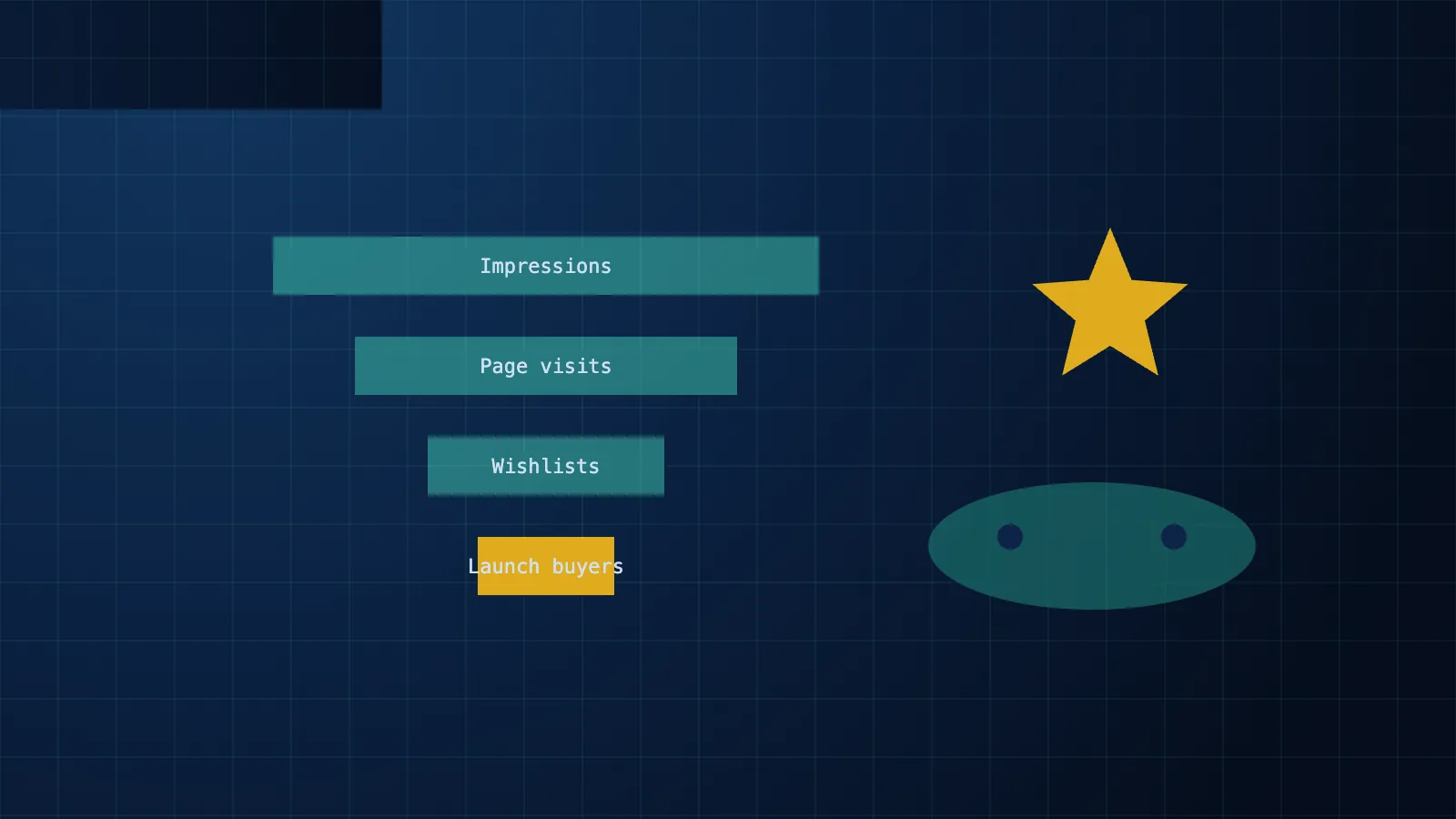
Wishlists are the single metric that predicts Steam launch-day sales better than anything else. I’ve run acquisition campaigns for game launches where the entire strategy centered on one question: what actually drives a stranger to wishlist a game they’ve never heard of? Here’s what worked.
1. The store page has to earn the wishlist in 10 seconds
Most traffic to a Steam page bounces before reading a single line of description. The capsule art, the first three screenshots, and the trailer thumbnail carry almost all the weight. Before spending on acquisition, I always audit the page itself — a great campaign driving traffic to a weak page is money spent proving the page doesn’t convert.
2. Festivals and Steam events outperform paid ads
Steam Next Fest and genre-specific festivals consistently outperformed paid acquisition on cost-per-wishlist for the campaigns I’ve run. They put the game in front of an audience already in a “wishlist mode” mindset. If you’re only running one campaign before launch, make it a festival demo, not a paid push.
3. Creator seeding beats influencer spend
Sending free keys to mid-size creators who genuinely play the genre generated more wishlists per dollar than any paid influencer placement I tested. The content reads as discovery, not an ad — and genre-relevant audiences trust it more.
4. Community platforms compound over time
Reddit and Discord activity built months before launch consistently outperformed last-minute pushes. Wishlist campaigns that started with community-building 3–4 months out had a steadier, cheaper wishlist curve than campaigns that tried to compress everything into the final month.
The takeaway
Wishlist campaigns aren’t about spending more — they’re about sequencing correctly: fix the page, get into festivals, seed genuine creators, and start community work early. Budget goes further in that order than in reverse.
